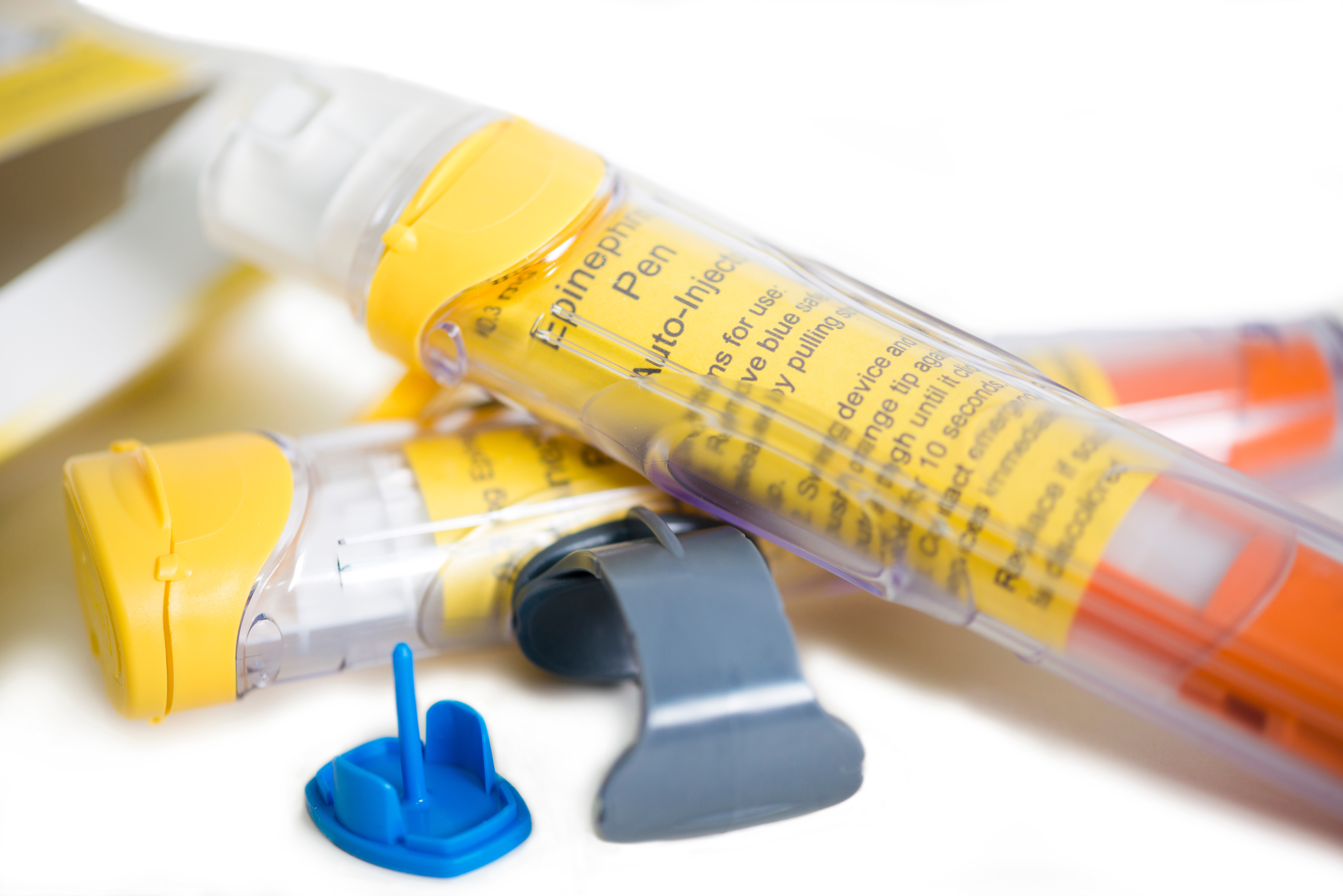
EpiPen Administration Module

Welcome to your EpiPen administration module. By the end, you will be confident with the following:

  • Understanding what anaphylaxis is
  • Identifying symptoms of anaphylaxis
  • Delivering an EpiPen dosage safely

You may always go back and forth between sections to refresh your learning.
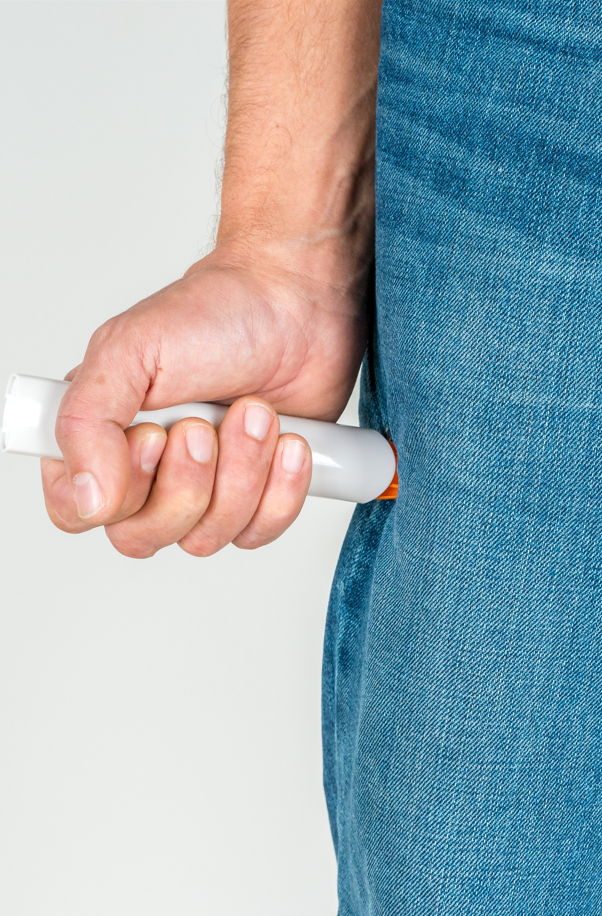
Person administering an EpiPen

Symptoms of Anaphylaxis

  • Swelling or itching of the lips, throat, tongue, eyes, and/or a metallic taste in their mouth
  • Nausea, diarrhea, stomach cramps, or vomiting
  • Breathing or swallowing problems, wheezing and coughing
  • Flushing, itching, hives, or skin redness
  • Heart palpitations, decreased blood pressure, increased heart rate, paleness, and chest pain
  • Faintness, collapsing, loss of consciousness, high anxiety

*Someone may have one, multiple, or all of these symptoms.

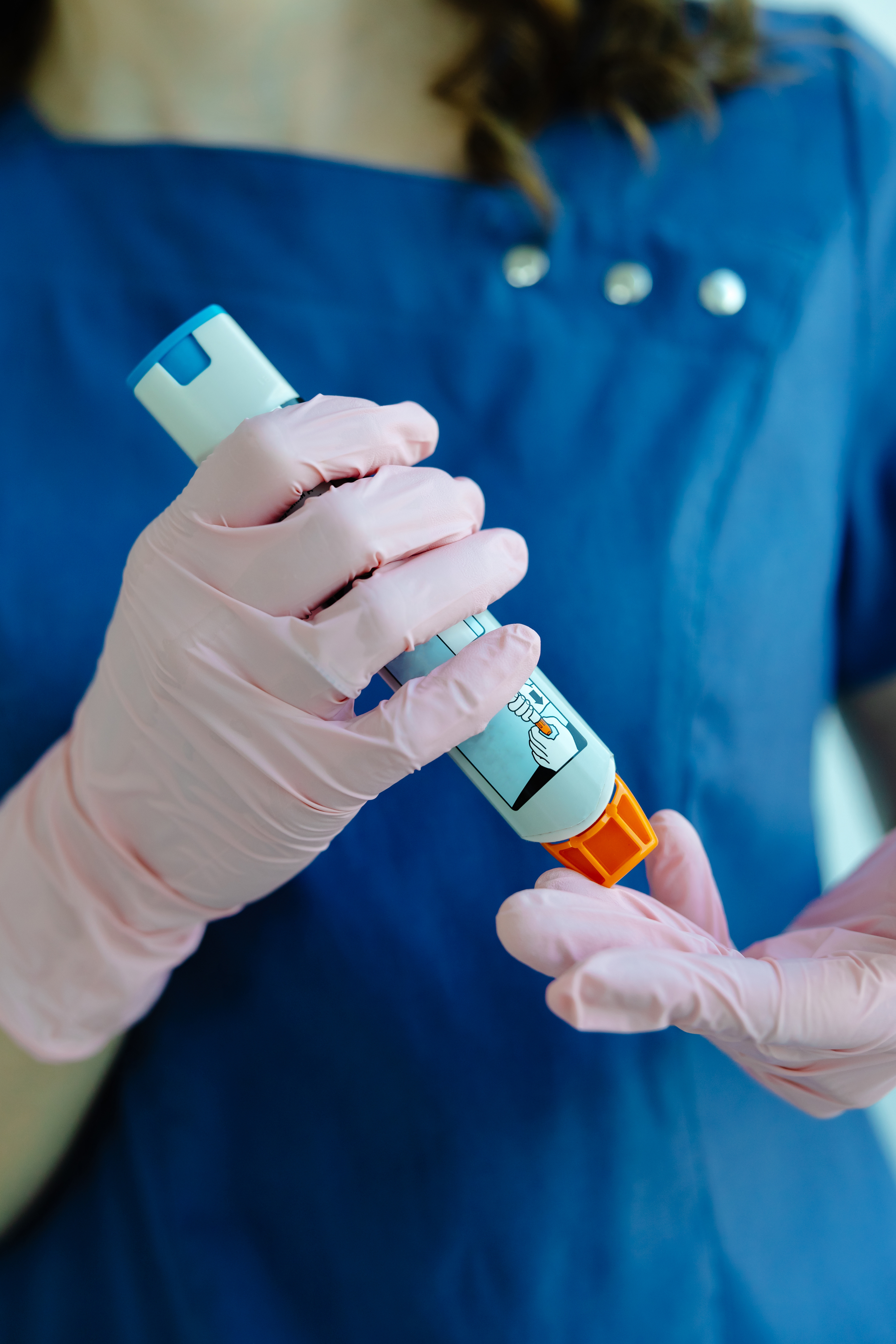
Always remember: Blue to the sky, orange to the thigh.

Administering an EpiPen

  1. Handle the EpiPen with the orange section pointing downwards
  2. Remove the blue cap upwards. Do not twist or bend the cap
  3. Position the orange tip to the middle of the outer thigh
  4. Push the orange tip hard into the thigh. You will hear a pop, which indicates that the EpiPen has activated
  5. Keep the EpiPen in place for three seconds

Call 911 immediately after administration.
DO NOT exceed 2 doses at a time.

Always remember: Blue to the sky, orange to the thigh.

Pause & Reflect

When administering an EpiPen, where would the injection site be?

How long would you hold the EpiPen in place after activating it?

Let's Test your Learning

There will be a series of questions to answer to ensure you're confident with your newfound knowledge. This will include but is not limited to information regarding EpiPen administration steps and identifying symptoms. There will be three multiple choice questions followed by a step rearrangement challenge.


You may go back at any time and revise to redeliver this mock quiz.

Medical professional with clipboard
0% (0/4)

Let's Test your Learning

When administering an EpiPen, which phrase helps you remember the correct orientation of the device?

EpiPen devices
25% (1/4)

Let's Test your Learning

Which of the following is NOT a symptom of anaphylaxis?

Person experiencing allergic skin reaction
50% (2/4)

Let's Test your Learning

What should you do after administering an EpiPen?

EpiPen being administered into thigh
75% (3/4)

Let's Test your Learning

Please rearrange these steps in the correct order.

Shuffled Steps

Your Answer

Thank You

For Completing the EpiPen Administration Module.

You now have general knowledge of how to properly and safely administer an EpiPen.


You can now:

  • Identify symptoms of anaphylaxis
  • Perform the appropriate steps to administer an EpiPen